
This section includes details on our market environment, business environment forecast, and Medium-Term Business Plan.
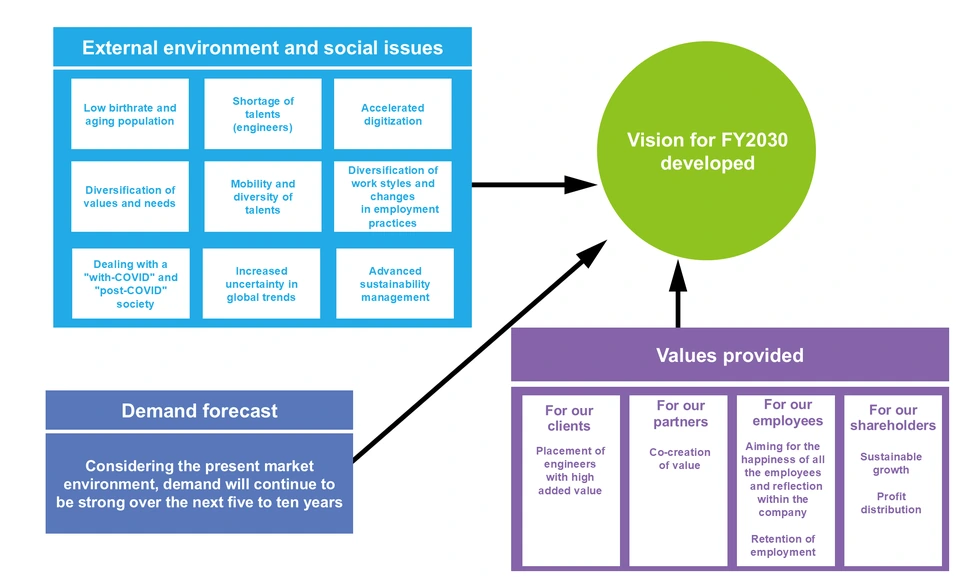
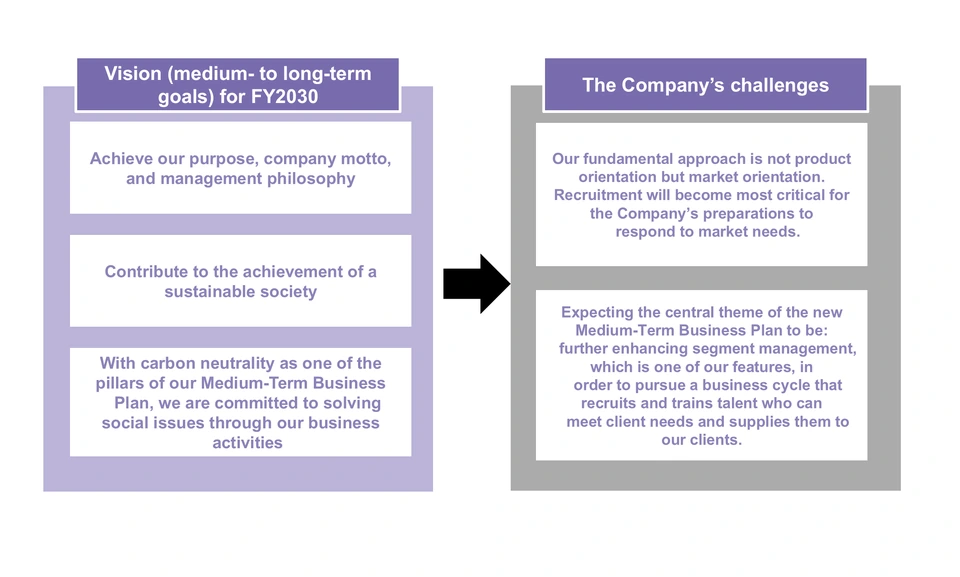
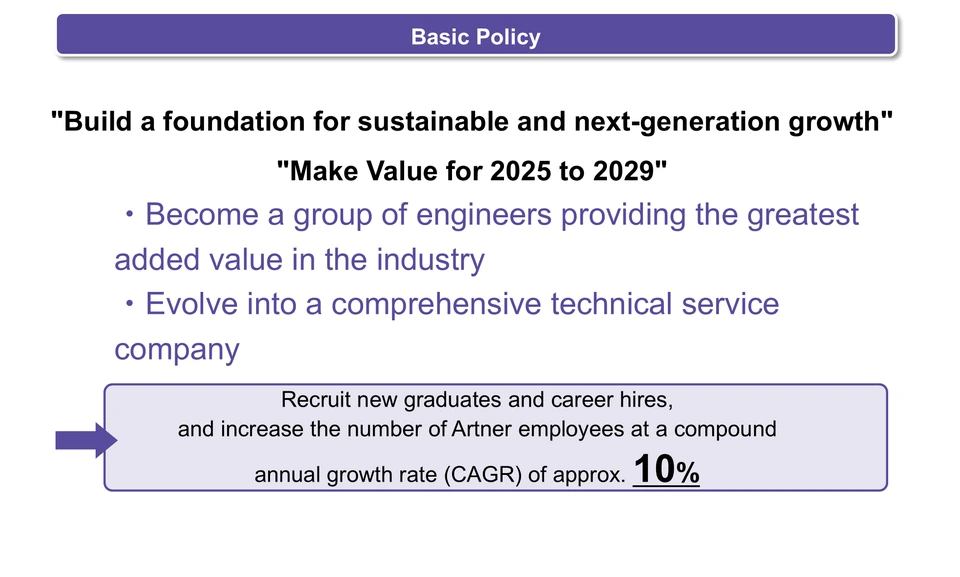
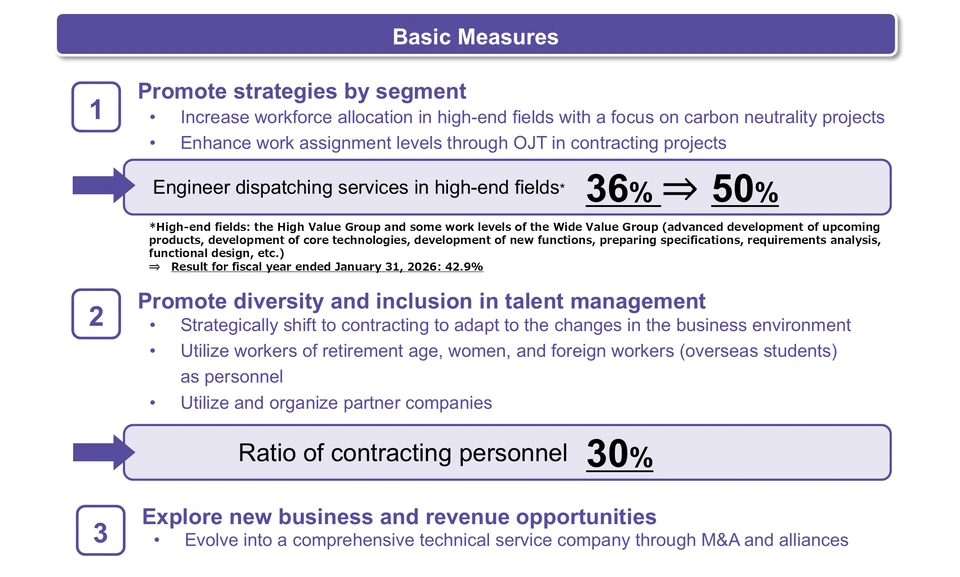
Considering stakeholder interests and social issues, as well as their impact on our business management, Artner has identified eight materiality topics that should be prioritized. Based on our understanding of the importance of the materiality topics we have identified, we are committed to engaging in effective management practices and business activities to resolve these issues.


We determined our materiality topics through the following process:
 |
Identify the issues We analyzed potential materiality topics based on various international standards, ESG-related external evaluations, and requirements from society including stakeholders. Thirty-one topics were identified. |
 |
Prioritize the issues The identified issues were assessed by conducting internal and external stakeholder surveys in terms of their expectation and requirement levels for Artner, and then prioritized by two criteria: “importance to stakeholders” and “importance to Artner.” |
 |
Validate and determine the material issues Selected and prioritized issues were reviewed in the Sustainability Committee for validation to finalize Artner’s materiality topics. |
|
Identify the issues We analyzed potential materiality topics based on various international standards, ESG-related external evaluations, and requirements from society including stakeholders. Thirty-one topics were identified. |
|
Prioritize the issues The identified issues were assessed by conducting internal and external stakeholder surveys in terms of their expectation and requirement levels for Artner, and then prioritized by two criteria: “importance to stakeholders” and “importance to Artner.” |
|
Validate and determine the material issues Selected and prioritized issues were reviewed in the Sustainability Committee for validation to finalize Artner’s materiality topics. |
Summary of Consolidated Financial Results for the Fiscal Year Ended January 31, 2026 (Under Japanese GAAP) [PDF 758KB/13 pages]
FY2026 Financial Summary Supplementary Explanation Material [PDF 1.37MB/26 pages]
Medium-Term Business Plan (FY2026 to FY2030) / Action to Implement Management that is Conscious of Cost of Capital and Stock Price [PDF 2.84MB/25 pages]
Materiality (material issues)
 Cookie Settings

