Establishing a Stable Financial Base and Continuously Improving Enterprise Value
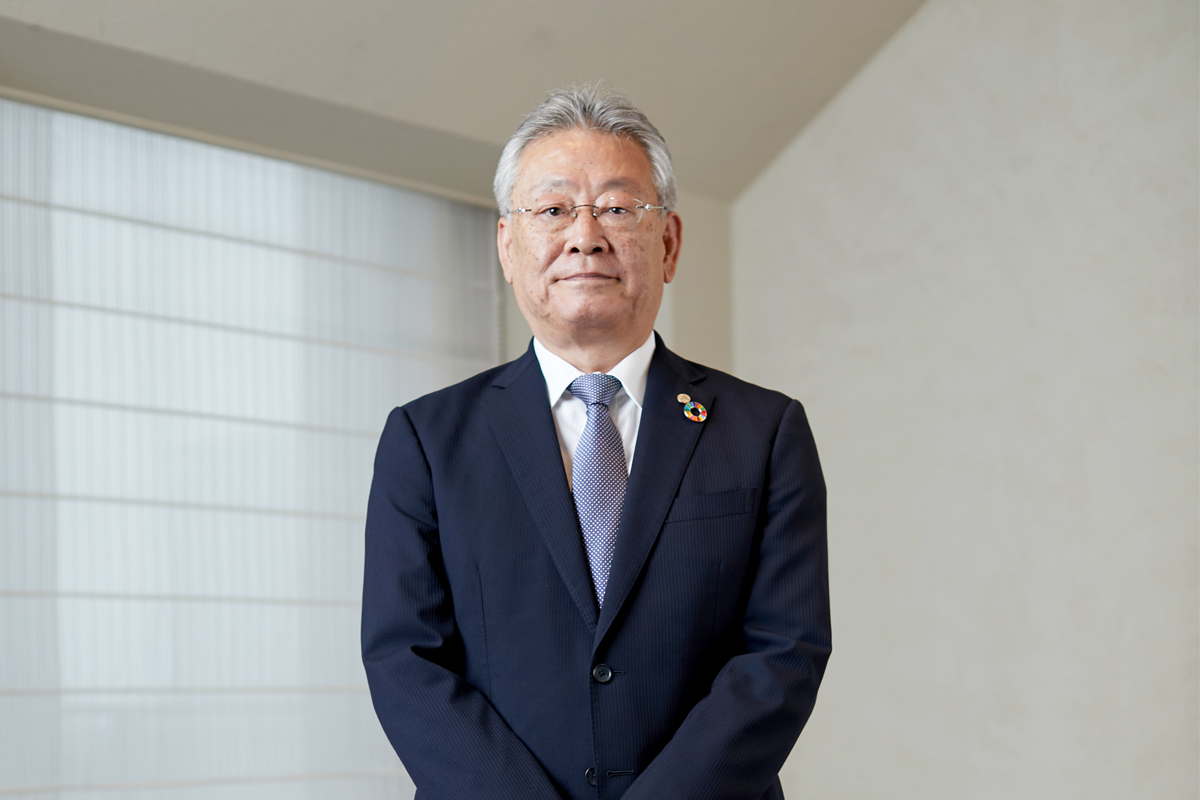
Chief Financial Officer (CFO)
HARIGAE Tomonori
Our Group made the transition to consolidated settlements of accounts as of FY2026. While there were concerns surrounding the impact of US trade policy, particularly on the automobile industry, FY2026 saw our Group achieve net sales of ¥12,046 million, profit attributable to owners of parent of ¥1,258 million, and an EPS of ¥118.47 due to increased demand from automobile-related manufacturers and semiconductor manufacturing equipment manufacturers, which constitute major customers. Additionally, operating cash flow saw a steady increase to ¥1,415 million.
For the Medium-Term Business Plan starting in the fiscal year ending January 31, 2026, our Group has set the following consolidated business targets: net sales of ¥20.0 billion; an operating margin of 15.0%; and employment of over 2,250 engineers.
Net sales of the engineer dispatching business, our main business, is primarily calculated by multiplying the number of engineers and the utilization rate to get the number of operative personnel, which is then multiplied by the contract unit price of each engineer and the total work person-hours. Also, in engineer dispatching, expenses such as labor costs for engineers assigned to our clients are recorded as cost of sales, while in contracting, expenses such as labor costs for engineers and outsourcing costs paid to partner companies are recorded as cost of sales.
Meanwhile, expenses such as labor costs for engineers incurred during internal education and training (or while on standby) and labor costs for administrative staff positions are recorded as SG&A expenses. Based on this business structure, we place importance on the number of engineers, utilization rate, and unit price of engineers as management indicators.
Regarding the market environment for FY2027, the destabilization of the international situation continues to pose a downside risk to the global economy. However, our Group’s strategically important clients, such as automobile-related manufacturers and semiconductor manufacturing equipment manufacturers, are expected to increase their development speed through proactive investment in key areas under the national government’s growth strategy.
With this market environment, we foresee buoyant demand for engineers our Group provides will continue. Given this forecast, in regard to individual indicators, we envision that the number of engineers will increase, that the unit price of engineers will continue to rise, and that the utilization rate and total work person-hours will remain at the same levels as the same period of the previous year. We will continue to work toward realizing our Medium-Term Business Plan targets of increasing the number of engineers to over 2,250 and maintaining a high utilization rate, unit price of engineers, and total work person-hours. By doing so, we will endeavor to grow net sales to ¥20.0 billion, and, by managing the recruitment cost ratio relative to net sales appropriately, achieve an operating margin of 15.0%.
The Company attaches importance to the cost of shareholders’ equity and recognizes it at a range of approximately 6 to 7%. Whereas our Medium-Term Business Plan ROE target is of over 20%, we achieved an ROE of 24.1% in the fiscal year ended January 31, 2026, surpassing the cost of shareholders’ equity and realizing high capital efficiency. Going forward, we will continue to increase profit, the numerator in the ROE equation. With regard to the denominator, equity, we intend to invest in growth and return profits to our shareholders in line with our cash allocation policy while considering the balance with retained earnings. Additionally, our Group’s P/B ratio at the end of the fiscal year ended January 31, 2026 was 4.2 times. Going forward, we will continue to strive to enhance our IR activities to ensure that we are appropriately valued by capital markets.
In order to achieve sustainable growth, we will strive to secure stable cash flows and efficient capital allocation. We aim to hold approximately three months’ worth of monthly net sales as cash on hand, and to reserve any surplus funds for future growth opportunities.
Regarding cash flow within the Medium-Term Business Plan, we expect cash inflow of approximately ¥9.8 billion (approximately ¥1.0 billion from debt leverage and approximately ¥8.8 billion from operating activities), cash outflow of approximately ¥4.8 billion from growth investment,* and shareholder returns of approximately ¥5.0 billion.
In light of the cash outflow resulting from M&A, we took out a loan to enable us to respond flexibly to changes in the business environment and to growth opportunities. Even after taking out the loan, our equity ratio remains at a high level, and we do not believe this will have a significant impact on our financial soundness.
In terms of profit distribution, we comprehensively consider future business developments, earnings, and the management environment, as well as the strengthening of our management foundations, and position the supply of stable dividends to our shareholders as top-priority management tasks. Accordingly, we have agreed to consider a payout ratio based on 50%. In addition, our basic approach is to ensure that the dividend remains at least at the same amount as the previous year and continues to increase.
To facilitate the enhancement of shareholder returns and improvement of capital efficiency, at its meeting held on March 13, 2026, our Board of Directors resolved to purchase up to 30,000 treasury shares. This purchase was completed on March 25 (total number of shares purchased: 25,700 shares; total purchase value: ¥50 million). These will be reviewed as part of future capital policies, including their utilization in stock-based compensation for board members and employees.
*M&A, alliances, facility investment (expansion of training hubs, etc.), human capital investment (education, health and productivity management), stronger business promotion (recruitment, IT/DX investment)
*Includes amount implemented in FY2026.
Cash Inflow
Approx. ¥9.8 billion
Debt leverage
Cash Flows from Operating Activities
(Medium-Term Business Plan cumulative)
Cash Outflow
Approx. ¥9.8 billion
|
Growth Investment
¥4.8 billion
|
|
|
Shareholder Returns
¥5.0 billion
|
|
*For cash allocation, unlike a record of changes in cash similar to a cash flow statement, we present our business management policy that dictates how we will reallocate generated cash inflow to growth investment and shareholder returns.
*The growth investment in M&A under cash outflow differs from “expenditures for the acquisition of subsidiaries” (the net amount calculated by subtracting the amount of cash and cash equivalents held by the acquired subsidiary at the time of acquisition from the amount of cash and cash equivalents paid for the acquisition) on the consolidated cash flow statement. It refers to the total amount of consideration for the acquisition.
Regarding the performance of our two consolidated subsidiaries, CLIP SOFT reported net sales of ¥279 million and profit of ¥15 million for the fiscal year ended August 2025, while JOUHOU GIKEN reported net sales of ¥1,005 million and profit of ¥67 million for the fiscal year ended December 2025. Combined, these two consolidated subsidiaries showed net sales of ¥1,284 million and profit of ¥82 million.
The amount of goodwill incurred came to ¥329 million for CLIP SOFT and ¥1,198 million for JOUHOU GIKEN. As of the end of the current consolidated fiscal year (January 31, 2026), the total for the two consolidated subsidiaries was ¥1,519 million.
The amortization period and method are based on straight-line amortization over a 10-year period. Since the two consolidated subsidiaries together generate goodwill amortization of approximately ¥150 million per annum, we will appropriately manage performance for the Group overall and manifest synergies to improve performance so that we can post profits exceeding that amount.
As a company listed on the Prime Market of the Tokyo Stock Exchange, Artner is committed to managing and disclosing our management indicators appropriately, striving for transparent and trustworthy financial management to earn and maintain trust from our stakeholders.
Moreover, we are endeavoring to enhance our financial governance from the standpoint of consolidated management. Under a unified management system across the entire Group, we practice management that emphasizes profitability, capital efficiency, and soundness on a consolidated basis while respecting the business characteristics of each Group company. Furthermore, with stable cash generation as our starting point, we will endeavor to reinforce our management foundation that underpins sustainable growth while being mindful to adequately balance growth investment and shareholder returns.
 Cookie Settings