Our company operates in the human resources business, and has signed the United Nations Global Compact and supports its Ten Principles. As such, we recognize the importance of respecting human rights within our supply chain. We have already implemented initiatives related to human rights. Our Basic Sustainability Policy includes the goal of achieving “happiness for all employees,” and places the respect for human rights as one of eight “materiality (material issues)” that should be prioritized. The UN’s Guiding Principles on Business and Human Rights (UNGP) clarify the responsibility companies have to respect human rights, and recent years have seen this become an increasingly important issue in regard to business continuity. Taking into account our previous efforts and the social background, we established our Human Rights Policy in February 2024. This policy will be an integral part of our business activities going forward, and we will encourage our suppliers to do the same, thereby further promoting our efforts to respect human rights.
1. Basic view on human rights
2. Key international human rights norms that this policy complies with
3. Scope
4. Initiatives to ensure human rights are respected in our business activities
5. Governance
6. Human rights due diligence
7. Remediation and relief
8. Education and training
9. Information disclosure
10. Dialogue and discussion with stakeholders
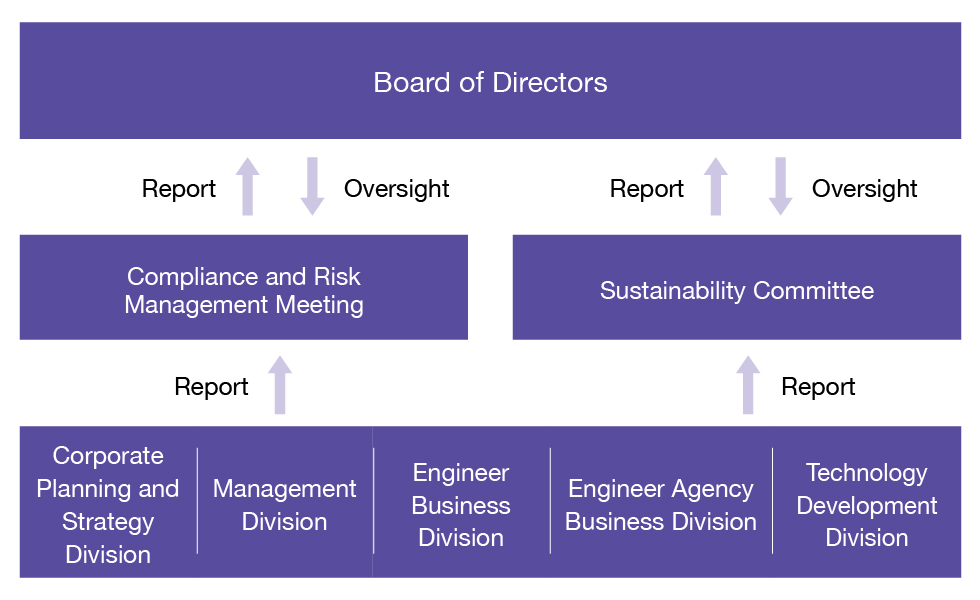
Artner considers human rights to be a key sustainability issue and has established the Sustainability Committee under the direct supervision of the Board of Directors to establish human rights-related sustainability policies, targets, and action plans; manage and evaluate progress toward these targets; deliberate on individual measures; and report to the Board of Directors.
We have established a human rights due diligence system through which we identify negative impacts on human rights and work to prevent and mitigate them. In FY2024, we conducted a questionnaire-based survey of our partners on their basic stance, respect for human rights, and health and safety issues. We also assessed the status of their human rights initiatives, organized the issues, and formulated a three-year roadmap.
During the fiscal year in question, we conducted a human rights risk assessment in order to identify the negative impacts of our business activities and supply chain on human rights, and created a risk map for gaining an overall picture of priority issues. In addition, because the circumstances surrounding human rights are constantly changing, we will endeavor to mitigate human rights risks by continuously striving to keep current with the latest information and human rights standards.
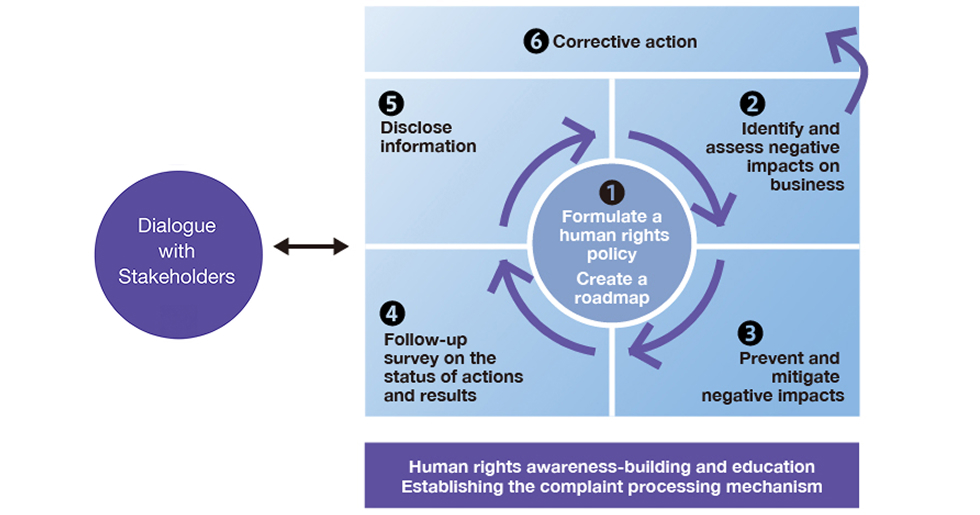
Through our human rights risk assessment, we identified key human rights issues that must be addressed with priority based on the potential for negative impacts on human rights arising from our business activities and supply chain and the severity of those impacts. In conducting the assessment, we identified business fields with significant risks, organized the processes through which negative impacts arise, evaluated our involvement, and assigned a priority order for responses. As a result, we identified the following as human rights issues of relatively high importance, among other issues: harassment as well as unreasonable instructions and coercion at client companies; isolation and a decline in psychological safety resulting from being the sole employee on permanent assignment; mental health issues; customer harassment; unfairness in evaluations, working conditions, and the like; leaks of personal information in the course of business; child labor and forced labor in the supply chain; human rights risks related to conflict minerals; and insufficient verification and management of respect for human rights on the supplier side. Going forward, we will promote measures to prevent and mitigate the identified key issues through education and awareness-raising, the operation of consultation desks and our complaint processing mechanism, collaboration with client companies and partners, supply chain management, and so forth. We will also review assessment results and the effectiveness of measures on a regular basis to help improve the effectiveness of our efforts to respect human rights.
We have established a helpline to receive any reports on compliance violations and inquiries related to human rights and anti-corruption, and take steps as necessary for relief and remediation upon investigation. We strictly enforce the confidentiality and protection of whistleblowers’ personal information and prohibit the disadvantageous treatment of whistleblowers based on their reports.
During the fiscal year in question, we conducted a review using a checklist to further enhance the effectiveness of our complaint processing mechanism. In conducting the review, we verified the overall operation of the system from such perspectives as its legitimacy, ease of use, fairness, and transparency, and identified elements that require improvement. Note that during the current fiscal year, there were zero consultations regarding human rights. We will continue to work on establishing mechanisms that allow those seeking consultations to do so with peace of mind and on spreading awareness of those mechanisms.
All employees at our company receive ongoing training that gives them basic views on how to think about human rights, and that raises awareness about human rights.
Human Rights Training
| Training theme | Description | ||
|---|---|---|---|
| 2025 | Human rights |
(1) What are human rights?
(2) Outline of the main human rights risks that companies should consider (3) The need for corporate human rights efforts and their impact
(4) Artner’s human rights efforts
(5) Artner’s human rights policy |
|
| 2024 | Human rights |
(1) What are human rights?
(2) Outline of the main human rights risks that companies should consider (3) The need for corporate human rights efforts and their impact
(4) Artner’s human rights efforts
(5) Artner’s human rights policy |
|
| 2023 | Human rights |
(1) What are human rights?
(2) Increasing attention on how companies are addressing human rights (3) Subjects (rights holders) whom companies should respect (4) Human rights risks
(5) Human rights fields that companies should respect
(6) Main impacts of adequate/inadequate human rights efforts (7) Artner’s human rights policy |
|
Artner recognizes respect for human rights in its business activities, including those in its supply chain, as an important matter. For partners, we share our procurement policy and verify that human rights are being respected through regular questionnaire surveys. We form a grasp of risk and analyze it based on the results of those surveys, and issue requests for improvements as necessary. In doing so, we continue endeavoring to practice appropriate supply chain management.
 Cookie Settings